


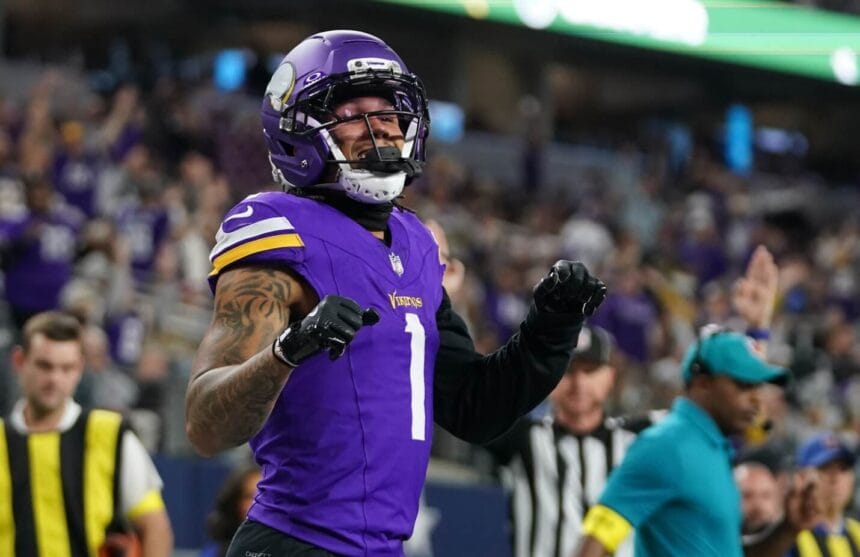
Originally published by RaidersNewswire.com
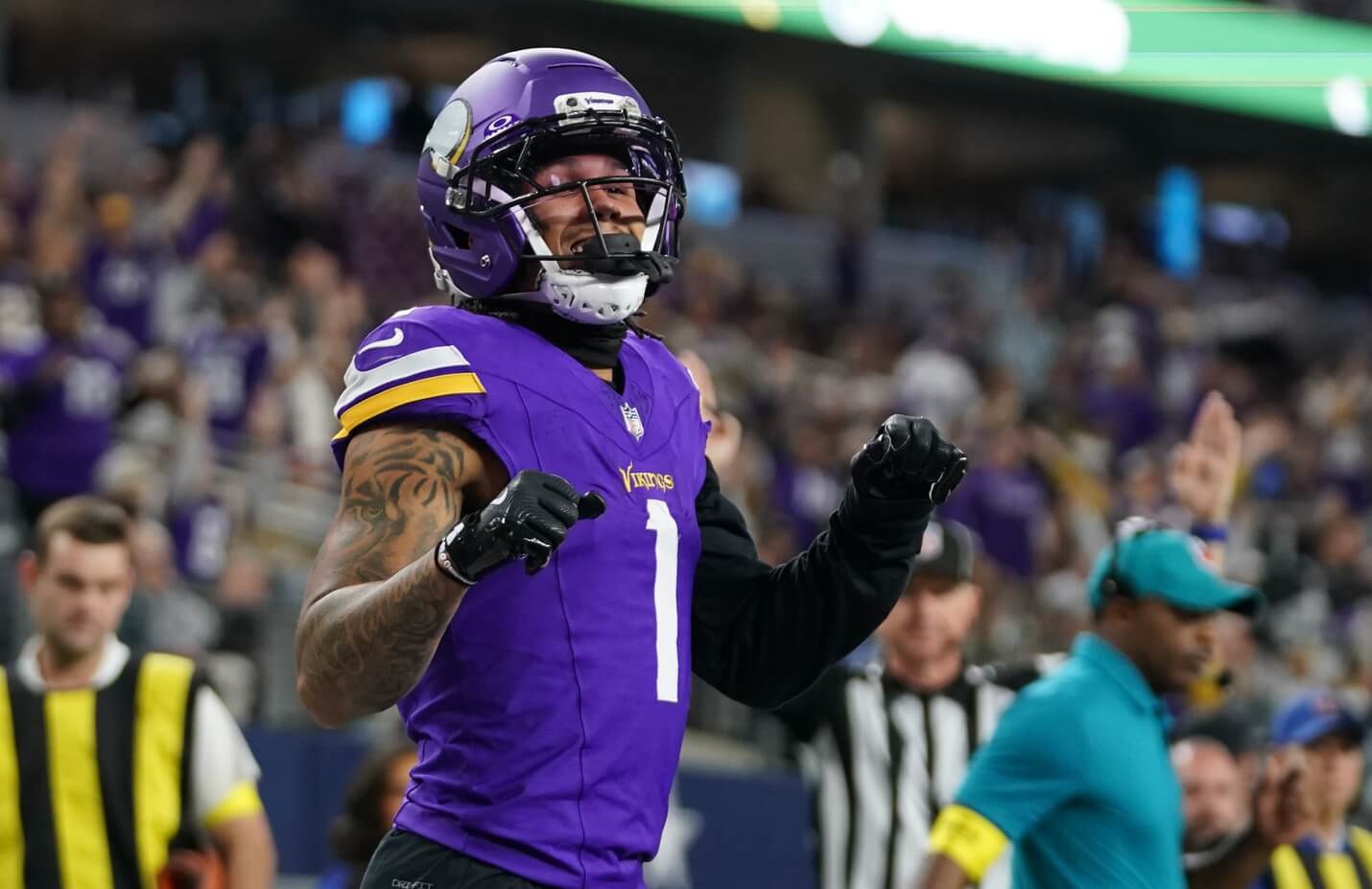
Las Vegas didn’t make the loudest move of the spring, but it made a very bettable one. The Raiders’ adding wide receiver Jalen Nailor in free agency is the kind of signing that rarely dominates headlines yet still nudges projection models, especially early in the offseason when sportsbooks and bettors are pricing a team’s offensive range of outcomes before training camp provides clarity.
Nailor’s profile fits what front offices usually target in this tier of free agency: a receiver who can stress the field, win on crossers and slot concepts when asked, and add speed that changes how defenses structure their early-down looks. He’s not a “your offense runs through him” player, but he can be the kind of piece that makes a quarterback’s life easier by creating cleaner spacing and forcing safeties to respect more than one threat.
That’s why early betting markets tend to react in subtle ways. The Raiders didn’t suddenly become a Super Bowl favorite because of one receiver signing, but the move can affect the margins that matter for bettors, including team totals, season-long player props, and how books price the offense in matchup-based markets once Week 1 lines appear.
Early Offensive Projections Shift Before the Public Notices
Sportsbooks build offseason numbers with a blend of power ratings, historical efficiency, coaching expectations, and depth chart assumptions. A mid-level receiver signing can change those assumptions in two primary areas: expected explosiveness and expected consistency.
According to GamblingNerd.com, “explosiveness influences how a team is priced in totals markets and derivative scoring angles, because one or two additional chunk plays per game can swing outcomes in ways the public tends to underestimate. Consistency matters for season-long markets because sustained drives and fewer “dead” possessions are often the difference between a respectable scoring profile and one that leaves a team living on razor-thin margins.”
For the Raiders, Nailor’s addition is most likely to adjust projections by expanding the viable passing menu. When a team can credibly stay in three-receiver groupings without treating the third target as a decoy, defenses are less willing to compress the field. That can show up as a small but meaningful lift in early-down efficiency, a cleaner run-game environment, and more comfortable third-and-manageable situations that keep a playbook open.
Where the Betting Market Typically Reacts First
The earliest adjustments usually appear in corners of the board that don’t attract the same volume as championship futures. Season team totals are often among the first to reflect a slight upgrade because they’re driven by aggregated offense-plus-schedule assumptions rather than one marquee narrative.
Quarterback passing markets can shift early as well, but the move is often more about efficiency than volume. If a receiver addition increases completion value and reduces the number of possessions that die on a covered third read, models can lift passing yard expectations even if attempts remain in the same band.
Receiver room projections can go in two directions depending on how books interpret the depth chart. Sometimes, the overall passing pie is lifted because the offense is expected to support multiple productive wideouts. Other times, the top option’s projection stays largely stable while the secondary and tertiary numbers are rebalanced to account for a new player absorbing targets that previously floated to replacement-level snaps.
What This Means for Player Props in 2026
Nailor’s presence matters most in how it influences prop pricing once books post full-season and weekly markets. In many cases, a deeper receiver group raises touchdown expectation more than raw yardage expectation, because spacing can improve red-zone outcomes even when total volume is unchanged. Touchdowns are noisy, but the inputs that support them—separation windows, defensive attention, and route diversity—are exactly where a speed addition can help.
The more interesting angle for bettors is how an added receiver can quietly improve the top receiver’s target quality. When a defense can’t roll coverage as aggressively or squat on intermediate routes, the WR1 may not see a massive target spike, but can see more favorable matchups and higher-leverage looks, which matters for both yardage and scoring props.
For Nailor specifically, the market is often slow to price “role clarity.” If his expected usage leans toward field-stretching and motion concepts, his season-long yardage number may not be the only place where value appears. His weekly profile can produce spots where the longest reception markets, alternative receiving yards, or game-script-specific receiving props become more efficient ways to express the bet than a single-season total.
The Raiders’ Win Total Angle
Skill-position additions rarely move win totals dramatically by themselves, but they can change how you should interpret the number you’re being offered. When a team is clustered in that league-wide middle class, the swing between a solid season and a disappointing one often comes down to a handful of late-game possessions, third-and-medium conversions, and red-zone efficiency that feels small in isolation but huge across 17 games.
That’s where a signing like Nailor can matter in a way that doesn’t look dramatic on paper. If he contributes to even a modest increase in explosive rate or reduces the frequency of stalled drives, the Raiders’ “one-score” profile can improve, and that is exactly the type of hidden influence that separates teams that land a game over their number from teams that miss by a game.
What Could Be the Hidden Value for Bettors
The best early opportunities around moves like this typically come from misalignment across markets. If the overall scoring expectation is nudged upward but certain player markets remain anchored to older assumptions, you can end up with pricing that tells two different stories at once. That disconnect is where disciplined bettors find edges before the board fully catches up.
The cleanest way to approach it is to build one coherent thesis and stick to it. If your view is that the Raiders’ offense becomes more explosive and less predictable, the most logical bets are the ones that pay off when explosiveness appears in the box score, not the ones that require perfect season-long volume. The best numbers tend to appear early, before training camp reports and preseason usage make the role distribution more obvious and the market tightens.
Las Vegas didn’t sign a superstar, but it did add a piece that can shift how opponents defend them and how their offense sustains drives. In early offseason betting, those “small” changes are often the ones that create value—because markets don’t always move much, even when the real range of outcomes does.
The post Raiders Add Jalen Nailor in Free Agency, Early Betting Markets Adjust Offensive Projections for 2026 appeared first on Raiders Newswire.